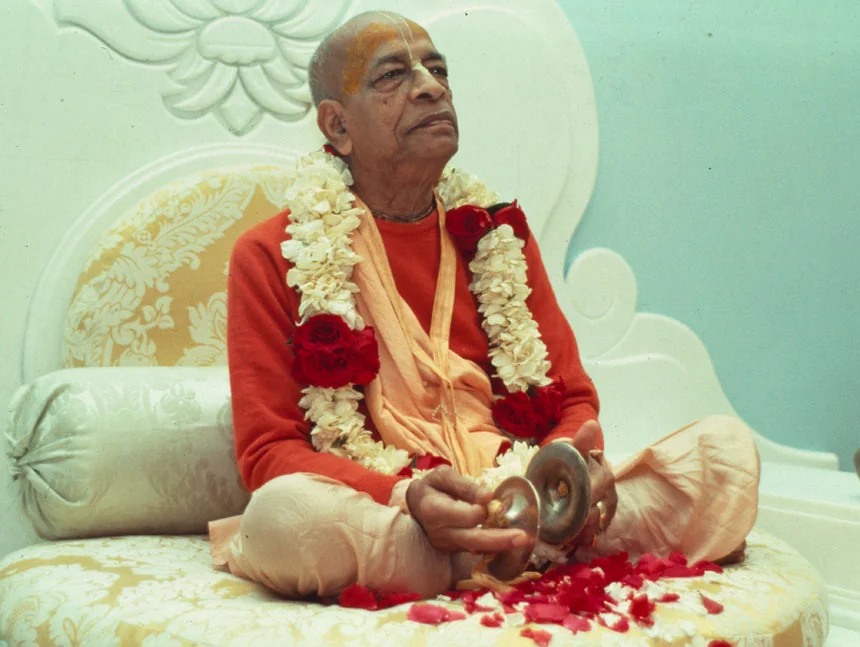
Room Conversation

Practical Accommodation Arrangements, Property Legal Disputes

📅 May 25, 1977 📍 Vrindavan ⏱ 17 min
Even in managing worldly complications, a devotee remains fixed in Krishna consciousness and practical wisdom.
Listen — Srila Prabhupada Uvaca

Transcript Preview

Prabhupāda: [Transl. That I will go there and stay, for that some arrangements should be made.] Indian man (1): [Transl. About what? Tell me?]

Prabhupāda: [Transl. You know about what? I will have to go to the toilet. I need water.] Indian man (1): [Transl. When you will go to the latrine, it will be far for you.]

Prabhupāda: [Transl. Han?] Indian man (1): [Transl. The latrine will be little far for you.]

Prabhupāda: [Transl. That's what I am saying. Here I have got toilet, water-tap attached to my room.] Indian man (1): [Transl. That's right. Here you have got all kinds of facilities.]

Prabhupāda: [Transl. There no such facilities are available. Besides, my health is not well.] Indian man (1): [Transl. That is true. [aside: He is saying that I will go and stay there, but there is no arrangement. Latrine, water etc. So I told him that is sure. It's not like here. There you will have to move from one room to another….These facilities are not available there.] Prabhupāda: [Transl. My condition is not like that that I am doing everything alone. They are holding me while I move.] Indian man (1): [Transl. Aside: He is saying that my condition is not like as if I am doing everything alone. Now they take me to the latrine and bring back.] Indian man (2): [Transl. My condition is also like that.] Indian man (1): [Transl. Actually, that toilet will be little far for him.] Indian woman: [Transl. There is a latrine nearby.] Indian man (2): [Transl. There is a latrine near the room.] Indian man (1): [Transl. The latrine next to the room which Rādhā-ramaṇa Gosvāmī has built, can't you use that?] Prabhupāda: [Transl. Which one?] Indian man (1): [Transl. The old latrine which was there, but he had closed it, Madana-mohanjī, and he built a new sanitary latrine. That time we had objected that why did you close down the latrine and water-tap, Gurudāsajī, so his man who lives there had told us that we can use the latrine and water-tap. We have no objection.] Prabhupāda: [Transl. Which latrine?] Indian woman: [Transl. The one next to the staircase.] Indian man (1): [Transl. The sanitary latrine which Madana- mohana Gosvāmī had built. When you come out from your back door, it's just on the right side.] Prabhupāda: [Transl. Yes. That's the one I used to use.] Indian man (2): [Transl. When you took the upstairs room on rent, that time it was used.] Prabhupāda: [Transl. That means I will have to use the common latrine.] Indian man (1): [Transl. Apart from that there is a vacant land on the left side which Madana-mohanjī had it enclosed by a concrete wall. On the left side…When you come out from your back door there is a latrine-bathroom on the right hand side and a room on the left side. Adjacent to this there is a lawn where they made a water tank, on the open land. If you will personally come, you can take rest there nicely. Then you…in fact no one will intentionally give you any trouble there.] Prabhupāda: [Transl. Let my health improve little. Now my health is bad. Whenever I will go five, six people will accompany me. Just like when I stayed there last time five, seven people stayed with me.] Indian man (1): [Transl. Yes. That you can stay as many people as you like.] Prabhupāda: [Transl. No. I am just telling you. They will never allow me to stay alone nor can I stay.] Indian man (2): [Transl. For you all arrangements can be made in that small place only.] Indian man (1): [Transl. You have got competent...] Prabhupāda: [Transl. I can get everything done. If they give permission, I can have everything arranged as long as I can. I did get it done, but he forcibily occupied my place. You too did not protest.] Indian man (1): [Transl. A legal case is already going on between him and us.] Prabhupāda: [Transl. That's what I am saying.] Indian man (1): [Transl. He is giving so many excuses to us about this matter. The next hearing date is on 28th May.] Indian man (2): [Transl. 28th.] Indian man (1): [Transl. On 28th.] Prabhupāda: [Transl. What date?] Indian man (1): [Transl. He again appealed for the house.] Prabhupāda: [Transl. Han?] Indian man (1): [Transl. He appealed for the house only.] Indian man (2): [Transl. …that it is my property, and they didn't give me money.] Prabhupāda: [Transl. Your property, you take it.] Indian man (2): [Transl. Two times it has been rejected by the court as he did not appear for the due dates. The next date is fixed to decide whether the appeal should be accepted or not.] Indian man (1): [Transl. Whether the appeal should be accepted or not. Regarding that.] Indian man (2): [Transl. That date.] Indian man (1): [Transl. There will be argument on this point.] Prabhupāda: [Transl. If appeal has to be made, it has to be made in the high court.] Indian man (1): [Transl. The time for appeal is over. I did appeal in time, but he did not attend the hearing date. So it was rejected. Then again I submitted an application and the court again fixed a date for hearing. But again he did not appear and the application was rejected. Then for the 3rd application he came and the Magistrate accepted it, but with a fee of Rs 20. Now he has given the date 28th May for hearing. On that day there will be argument on whether the application should be accepted or not.] Indian man (2): [Transl. Or to be rejected.] Prabhupāda: [Transl. Don't they receive water?] Indian man (1): [Transl. Yes. They get.] Prabhupāda: Then why we have to make another tank? Tamāla Kṛṣṇa: They said that the... If we want water in that bathroom, then we have to have our own water hookup there. Prabhupāda: Who said? Tamāla Kṛṣṇa: The electric man who came there, the man from the electricity department. Their point was that there's more parties using the water than just ourselves. So if we do not... There has to be some way of determining who's using what water supply. Prabhupāda: Talk with Gosāñi. Tamāla Kṛṣṇa: The man came today from electric department. Indian man (1): Bāṅke contractor. Tamāla Kṛṣṇa: Hah. He said that this one Kalachand Goswami, he is living there, and he is using water. And we are living there, and we're using water. So how to determine who should pay for what water? There must be two meters. Indian man (1): [Transl. You mean an extra meter has to be installed.] Tamāla Kṛṣṇa: Hah, one meter for the water he uses and electricity he uses, and one meter for the water and electricity we use. Indian man (1): Your electricity is extra. Directly connected to the power house. Gurudāsajī… [aside: [Transl. Gurudāsajī has taken the electric line. Is it not?] Indian woman: [Transl. Yes. He has…] Tamāla Kṛṣṇa: But who pays Kalachand's electricity? Indian man (1): Kālāchāndjī is a disciple of Madana-mohana Goswāmī. Indian man (2): [Transl. He pays.] Tamāla Kṛṣṇa: Thikk hai. So how to judge how much electricity is used by us and how much electricity is being used or taken by the Kalachand Goswami? How to know how much he is using, how much we are using? If there is only one meter... Indian man (1): [Transl. He is saying that in one single meter we are using electricity and they are using electricity….] the meter is yours? Tamāla Kṛṣṇa: Now there's no meter. There's only one meter for whole thing. For whole site there's only one meter, water meter. But there are two parties. One is the Kalachand, and one we are. Indian man (1): So you install an extra meter in your room? Tamāla Kṛṣṇa: Yes. Yes. They want to put extra meter in the room. Indian man (2): We have to have extra meter. Tamāla Kṛṣṇa: To determine that we should only... Indian man (1): [Transl. There is one more point here that if Gurudāsajī has taken the connection and meter with his own expense, then the extra meter they should install. Why you should install?] Jayapatākā: [Transl. He is talking about water.] Indian man (1): [Transl. I see.] Jayapataka: [Transl. He is asking about water.] India man (1): [Transl. For water there is no need to install extra meter. How much water are you going to use?] Jayapatākā: Water is always nice. Indian man (2): [Transl. Water is needed.] Indian man (1): [Transl. Okay. But still unless your requirement is more than 2000/3000 galons, they will not install meter.] Tamāla Kṛṣṇa: What about electricity? Jayapatākā: We already got it. Indian man (2): [Transl. And so long Gurudāsajī was living there I was supplying him water.] Tamāla Kṛṣṇa: So he's saying that 'cause... Prabhupāda: Hmm? Tamāla Kṛṣṇa: Jayapatākā's saying... He's translating what they were talking, that there's already a meter for electricity. This new meter is proposed simply for water. But the cost of water is so cheap, what is the need of a meter? Jayapatākā: They're not making any claim for water. They say, "How much water you can use? It's a matter of a few paisa." Prabhupāda: Last time the Madana-mohana Goswami and Gurudāsa, the arrangement was to live without paying anything. Tamāla Kṛṣṇa: Right. Prabhupāda: To pay the electric charge. So he was paying about sixty-four rupees' electric charges. They were using hugely. Tamāla Kṛṣṇa: Including water. Prabhupāda: No, no. Electric. Tamāla Kṛṣṇa: Ācchā. Jayapatākā: Per year. Prabhupāda: Per month. Jayapatākā: Sixty-four rupees! Indian man (1): [Transl. Electric charge!] Tamāla Kṛṣṇa: Sixty-four rupees a month! Indian man (1): [Transl. When you took the room on rent for one year!] Prabhupāda: [Transl. Yes! They were using it in various ways. Heater and so many other things. They took sixty-four rupees from us.] Indian man (1): [Transl. I think they must have used heater etc.] Indian man (2): [Transl. Plenty of money.] Indian man (1): [Transl. He paid.] Indian man (2): [Transl. Who? Nāthu?] Indian man (1): [Transl. Yes. He paid his own share.] Tamāla Kṛṣṇa: So now we have a separate meter for electricity. There's already a separate meter for electricity, is it? Indian man (3): Yes, you have got your own. Tamāla Kṛṣṇa: Besides Madana Mohana, there's another one. Indian man (3): He has. That's all right. Why it is not working? Tamāla Kṛṣṇa: Because there was a wire that was not connected. Then the man came today, and he has connected, and he says, "Now you will have electricity. Then we said…" Prabhupāda: [Transl. I always had a separate meter.] Indian man (1): [Transl. You have got your own sub-meter. Aside: He has a sub-meter in his room.] Indian man (2): [Transl. Yes. Yes.] Tamāla Kṛṣṇa: So then we said, "All right, we also need water." He said, "For that, you will need a separate meter because they, Madana Mohana Goswami, does not want to pay your water costs." Then the man said, "Yes, we can put separate meter. It will take ten days to two weeks." Indian man (3): Oh, yes, you will do it. Tamāla Kṛṣṇa: But it will take some time, they say. Prabhupāda: So better to have a meter. Tamāla Kṛṣṇa: Better to avoid? Prabhupāda: No, no. Tap... Indian man (3): For the time being you have water from Kalachand. He is a man of this type. He will give. Tamāla Kṛṣṇa: He will give. Indian man (3): He will give you, and he'll ask Gurudāsa[?] also. Then he will do all, what is needful. Kalachand is a man of... Tamāla Kṛṣṇa: Where you are getting your drinking water from? Indian man (3): I? From my own pipe. Tamāla Kṛṣṇa: From pipe. Pipe water is good for drinking. Indian man (3): Yes. Tamāla Kṛṣṇa: Ācchā. Not from well. Indian man (3): No, no. Tamāla Kṛṣṇa: Well water is not good for drinking? Indian man (3): At Lotan Kunj, just a hundred yards from our temple, that well is very nice well. Tamāla Kṛṣṇa: What is the name? Indian man (3): Lotan Kunj. Tamāla Kṛṣṇa: Lotan Kunj. Indian man (3): First-class water. Tamāla Kṛṣṇa: Any time. Indian man (3): Yes, oh, yes. People take from that well water to their houses. Tamāla Kṛṣṇa: Anyone can come? Anyone can take, public? Indian man (2): Yes, yes. Tamāla Kṛṣṇa: Lotan Kunj. Prabhupāda: It is attached. Indian man (3): It is just near our temple. We use the Damodar-gherā. Damodar-gherā is there. We use that water. Our, these boys and these, they drink it. Tamāla Kṛṣṇa: And for washing and cooking we can get some water from Kalachand. Indian man (3): Oh, yes. Kalachand and well also. Tamāla Kṛṣṇa: And well also. Ācchā. Then there's no problem, Prabhupāda. We'll apply for our separate meter, and in the meantime, we'll take the water... Indian man (3): Oh, yes. For the time being you will be... Indian man (1): [Transl. see, for an extra meter Madana mohana Gosvami is forbidding.] Tamala Kṛṣṇa: In the meantime we will take… Indian man (1): [Transl. Kalachand is not for that. Water is to be given.] Indian man (2): [Transl. Kalachand can give you water only. About meter etc. you get a written permission from the Octroi. Municipality.] Indian man (1): [Transl. Otherwise there is no other way to get water.] Indian man (2): For the time being he will be helpful to give you water, Bas. that's all. [Transl. Just like I told him today and he said-Kālāchānd, that Gosāñijī, whatever you will say...] Indian man (1): [Transl. About water etc. Madana-mohana Gosvāmī will come on 28th so they can have a meeting with him and settle the mater.] Tamala Kṛṣṇa: That's good. Prabhupāda, can I bring up the point that these rooms should be… Indian man (2): [Transl. That fellow doesn't even see…] Indian man (1): [Transl. Tell like that. Don't speak in this way. Just tell as I say.] Indian man (2): On 28th May, he is expected to attend the civil judge, Mathura, you see. So on that day, if he comes here, have a discussion from him. Indian man (1): [Transl. Madana mohana Gosvami. For water etc.] Tamāla Kṛṣṇa: Madana-mohana Goswami? Indian man (2): Yes. What he says? Tamāla Kṛṣṇa: There actually, there's no... What about latrine? Indian man (2): Latrine is behind there. Rūpa Gosvāmī side. Swāmījī's latrine. Indian man (1): [Transl. That is closed down. Now there is another latrine on the other side.] Indian man (2): [Transl. I see.] Indian man (1): [Transl. That was closed down by Madana-mohana Gosvami.] Indian man (2): [Transl. That was closed by Madana-mohana Goswami.] Tamāla Kṛṣṇa: He closed off that latrine. Prabhupāda: That is back side. Indian man (1): [Transl. Let me tell you another thing, the tape recorder is on here and they are recording your wards.] Indian man (2): [Transl. Who?] Indian man (1): [Transl. Here. It is on since you came and kept next to you. So you talk carefully. Otherwise if you want to have the tape recorded turned off while speaking to Swāmijī, you say.] Indian man (2): [Transl. I don't want to talk in the tape recorder. I come to honor my Swāmījī and my elder brother... Prabhupāda: That's all right. Tamāla Kṛṣṇa: We tape everything Prabhupāda says. Everything he says, we tape, whether you're here or not here. Indian man (3): No, I don't want to talk on the machine. I don't want you to make. Tamāla Kṛṣṇa: We're not taping for any other purpose, but our Guru Mahārāja's words are very sacred to us, so we tape all the time, whether you're here or not here. Prabhupāda: No, he has objection to the tape... Tamāla Kṛṣṇa: I'm just explaining that it's not any, er,... [break] [end]

Devotional ServiceSpiritual MasterDetachmentAssociation of DevoteesVarnashrama
← All Srila Prabhupada lectures