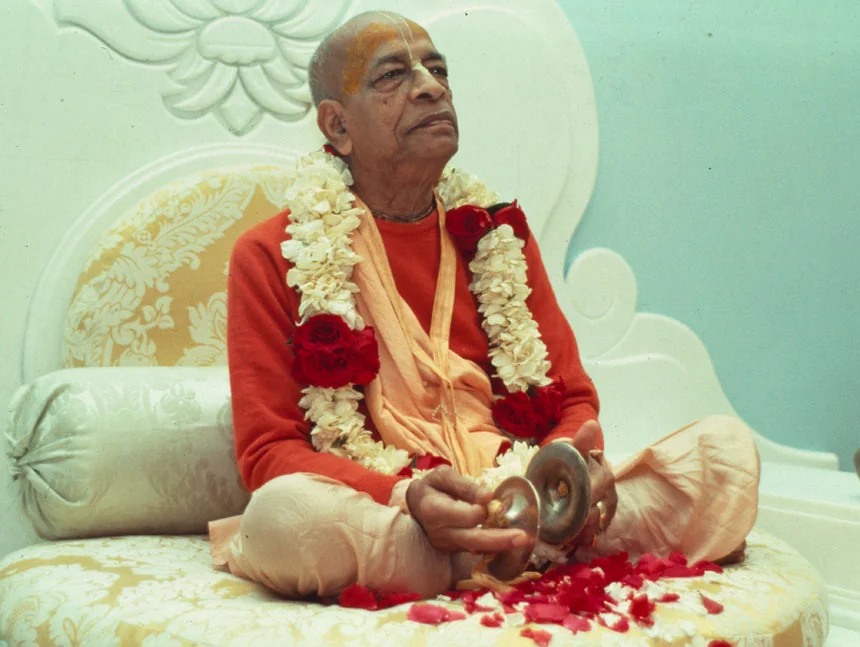
Lord Caitanya's tree of love manifests infinite branches of pure devotion, each reflecting unique expressions of divine affection.Listen — Srila Prabhupada Uvaca
Chanting Śrī Caitanya-caritāmṛta Ādi-līlā 10th and 11th Chapter — December 17, 1973, Los Angeles 731217CH-LOS ANGELES [35:23 Minutes] Chanting Cc-Adi-10-11th Ch_731217CH-LOS ANGELES The Trunk, Branches and Subbranches of the Caitanya Tree TEXT 1 śrī-caitanya-padāmbhojamadhupebhyo namo namaḥ kathañcid āśrayād yeṣāṁ śvāpi tad-gandha-bhāg bhavet Let me repeatedly offer my respectful obeisances unto the beelike devotees who always taste the honey of the lotus feet of Lord Caitanya Mahāprabhu. If even a doggish nondevotee somehow takes shelter of such devotees, he enjoys the aroma of the lotus flower. TEXT 2 jaya jaya śrī-kṛṣṇa-caitanya-nityānanda jayādvaitacandra jaya gaura-bhakta-vṛnda All glories to Lord Caitanya Mahāprabhu and Lord Nityānanda! All glories to Advaita Prabhu, and all glories to the devotees of Lord Caitanya, headed by Śrīvāsa! TEXT 3 ei mālīra—ei vṛkṣera akathya kathana ebe śuna mukhya-śākhāra nāma-vivaraṇa The description of Lord Caitanya as the gardener and the tree is inconceivable. Now hear with attention about the branches of this tree. TEXT 4 caitanya-gosāñira yata pāriṣada-caya guru-laghu-bhāva tāṭra nā haya niścaya The associates of Śrī Caitanya Mahāprabhu were many, but none of them should be considered lower or higher.
This cannot be ascertained. TEXT 5 yata yata mahānta kailā tāṭ-sabāra gaṇana keha karibāre nāre jyeṣṭha-laghu-krama All the great personalities in the line of Lord Caitanya enumerated these devotees, but they could not distinguish between the greater and the lesser. TEXT 6 ataeva tāṭ-sabāre kari’ namaskāra nāma-mātra kari, doṣa nā labe āmāra I offer my obeisances unto them as a token of respect. I request them not to consider my offenses. TEXT 7 vande śrī-kṛṣṇa-caitanyapremāmara-taroḥ priyān śākhā-rūpān bhakta-gaṇān kṛṣṇa-prema-phala-pradān I offer my obeisances to all the dear devotees of Śrī Caitanya Mahāprabhu, the eternal tree of love of Godhead. I offer my respects to all the branches of the tree, the devotees of the Lord who distribute the fruit of love of Kṛṣṇa. TEXT 8 śrīvāsa paṇḍita, āra śrī-rāma paṇḍita dui bhāi—dui śākhā, jagate vidita The two brothers Śrīvāsa Paṇḍita and Śrī Rāma Paṇḍita started two branches that are well known in the world. TEXT 9 śrīpati, śrīnidhi—tāṭra dui sahodara cāri bhāira dāsa-dāsī, gṛha-parikara Their two brothers were named Śrīpati and Śrīnidhi.
These four brothers and their servants and maidservants are considered one big branch. TEXT 10 dui śākhāra upaśākhāya tāṭ-sabāra gaṇana yāṭra gṛhe mahāprabhura sadā saṅkīrtana There is no counting the subbranches of these two branches. Śrī Caitanya Mahāprabhu held congregational chanting daily at the house of Śrīvāsa Paṇḍita. TEXT 11 cāri bhāi sa-vaṁśe kare caitanyera sevā gauracandra vinā nāhi jāne devī-devā These four brothers and their family members fully engaged in the service of Lord Caitanya. They knew no other god or goddess. TEXT 12 ‘ācāryaratna’ nāma dhare baḍa eka śākhā tāṭra parikara, tāṭra śākhā-upaśākhā Another big branch was Ācāryaratna, and his associates were subbranches. TEXT 13 ācāryaratnera nāma ‘śrī-candraśekhara’ yāṭra ghare devī-bhāve nācilā īśvara Ācāryaratna was also named Śrī Candraśekhara Ācārya. In a drama in his house, Lord Caitanya played the goddess of fortune. TEXT 14 puṇḍarīka vidyānidhi—baḍa-śākhā jāni yāṭra nāma lañā prabhu kāndilā āpani Puṇḍarīka Vidyānidhi, the third big branch, was so dear to Lord Caitanya Mahāprabhu that in his absence Lord Caitanya Himself would sometimes cry. TEXT 15 baḍa śākhā,—gadādhara paṇḍita-gosāñi teṭho lakṣmī-rūpā, tāṭra sama keha nāi Gadādhara Paṇḍita, the fourth branch, is described as an incarnation of the pleasure potency of Śrī Kṛṣṇa. No one, therefore, can equal him. TEXT 16 tāṭra śiṣya-upaśiṣya,—tāṭra upaśākhā eimata saba śākhā-upaśākhāra lekhā His disciples and granddisciples are his subbranches.
To describe them all would be difficult. TEXT 17 vakreśvara paṇḍita—prabhura baḍa priya bhṛtya eka-bhāve cabbiśa prahara yāṭra nṛtya Vakreśvara Paṇḍita, the fifth branch of the tree, was a very dear servant of Lord Caitanya’s. He could dance with constant ecstasy for seventy-two hours. TEXT 18 āpane mahāprabhu gāya yāṭra nṛtya-kāle prabhura caraṇa dhari’ vakreśvara bale Śrī Caitanya Mahāprabhu personally sang while Vakreśvara Paṇḍita danced, and thus Vakreśvara Paṇḍita fell at the lotus feet of the Lord and spoke as follows. TEXT 19 “daśa-sahasra gandharva more deha’ candramukha tārā gāya, muñi nācoṭ—tabe mora sukha” “O Candramukha! Please give me ten thousand Gandharvas. Let them sing as I dance, and then I will be greatly happy.” TEXT 20 prabhu bale—tumi mora pakṣa eka śākhā ākāśe uḍitāma yadi pāṭ āra pākhā Lord Caitanya replied, “I have only one wing like you, but if I had another, certainly I would fly in the sky!” TEXT 21 paṇḍita jagadānanda prabhura prāṇa-rūpa loke khyāta yeṭho satyabhāmāra svarūpa Paṇḍita Jagadānanda, the sixth branch of the Caitanya tree, was celebrated as the life and soul of the Lord.
He is known to have been an incarnation of Satyabhāmā [one of the chief queens of Lord Kṛṣṇa]. TEXT 22 prītye karite cāhe prabhura lālana-pālana vairāgya-loka-bhaye prabhu nā māne kakhana Jagadānanda Paṇḍita [as an incarnation of Satyabhāmā] always wanted to see to the comfort of Lord Caitanya, but since the Lord was a sannyāsī He did not accept the luxuries that Jagadānanda Paṇḍita offered. TEXT 23 dui-jane khaṅmaṭi lāgāya kondala tāṭra prītyera kathā āge kahiba sakala They sometimes appeared to fight over trifles, but these quarrels were based on their affection, of which I shall speak later. TEXT 24 rāghava-paṇḍita—prabhura ādya-anucara tāṭra eka śākhā mukhya—makaradhvaja kara Rāghava Paṇḍita, Lord Śrī Caitanya Mahāprabhu’s original follower, is understood to have been the seventh branch. From him proceeded another subbranch, headed by Makaradhvaja Kara. TEXT 25 tāṭhāra bhaginī damayantī prabhura priya dāsī prabhura bhoga-sāmagrī ye kare vāra-māsi Rāghava Paṇḍita’s sister Damayantī was the dear maidservant of the Lord. She always collected various ingredients with which to cook for Lord Caitanya. TEXT 26 se saba sāmagrī yata jhālite bhariyā rāghava la-iyā yā’na gupata kariyā The foods Damayantī cooked for Lord Caitanya when He was at Purī were carried in bags by her brother Rāghava without the knowledge of others. TEXT 27 vāra-māsa tāhā prabhu karena aṅgīkāra ‘rāghavera jhāli’ bali’ prasiddhi yāhāra The Lord accepted these foods throughout the entire year. Those bags are still celebrated as rāghavera jhāli [“the bags of Rāghava Paṇḍita”]. TEXT 28 se-saba sāmagrī āge kariba vistāra yāhāra śravaṇe bhaktera vahe aśrudhāra I shall describe the contents of the bags of Rāghava Paṇḍita later in this book.
Hearing this narration, devotees generally cry, and tears glide down from their eyes. TEXT 29 prabhura atyanta priya—paṇḍita gaṅgādāsa yāṭhāra smaraṇe haya sarva-bandha-nāśa Paṇḍita Gaṅgādāsa was the eighth dear branch of the tree of Śrī Caitanya Mahāprabhu. One who remembers his activities attains freedom from all bondage. TEXT 30 caitanya-pārṣada—śrī-ācārya purandara pitā kari’ yāṭre bale gaurāṅga-sundara Śrī Ācārya Purandara, the ninth branch, was a constant associate of Lord Caitanya’s. The Lord accepted him as His father. TEXT 31 dāmodara-paṇḍita śākhā premete pracaṇḍa prabhura upare yeṭho kaila vākya-daṇḍa Dāmodara Paṇḍita, the tenth branch of the Caitanya tree, was so elevated in love of Lord Caitanya that he once unhesitatingly chastised the Lord with strong words. TEXT 32 daṇḍa-kathā kahiba āge vistāra kariyā daṇḍe tuṣṭa prabhu tāṭre pāṭhāilā nadīyā Later in the Caitanya-caritāmṛta I shall describe this incident of chastisement in detail. The Lord, being very much satisfied by this chastisement, sent Dāmodara Paṇḍita to Navadvīpa. TEXT 33 tāṭhāra anuja śākhā—śaṅkara-paṇḍita ‘prabhu-pādopādhāna’ yāṭra nāma vidita The eleventh branch, the younger brother of Dāmodara Paṇḍita, was known as Śaṅkara Paṇḍita.
He was celebrated as the shoes of the Lord. TEXT 34 sadāśiva-paṇḍita yāṭra prabhu-pade āśa prathamei nityānandera yāṭra ghare vāsa Sadāśiva Paṇḍita, the twelfth branch, was always eager to serve the lotus feet of the Lord. It was his good fortune that when Lord Nityānanda came to Navadvīpa He resided at his house. TEXT 35 śrī-nṛsiṁha-upāsaka—pradyumna brahmacārī prabhu tāṭra nāma kailā ‘nṛsiṁhānanda’ kari’ The thirteenth branch was Pradyumna Brahmacārī. Since he was a worshiper of Lord Nṛsiṁha-deva, Śrī Caitanya Mahāprabhu changed his name to Nṛsiṁhānanda Brahmacārī. TEXT 36 nārāyaṇa-paṇḍita eka baḍai udāra caitanya-caraṇa vinu nāhi jāne āra Nārāyaṇa Paṇḍita, the fourteenth branch, a great and liberal devotee, did not know any shelter but Lord Caitanya’s lotus feet. TEXT 37 śrīmān-paṇḍita śākhā—prabhura nija bhṛtya deuṭi dharena, yabe prabhu karena nṛtya The fifteenth branch was Śrīmān Paṇḍita, who was a constant servitor of Lord Caitanya Mahāprabhu. He used to carry a torch while the Lord danced. TEXT 38 śuklāmbara-brahmacārī baḍa bhāgyavān yāṭra anna māgi’ kāḍi’ khāilā bhagavān The sixteenth branch, Śuklāmbara Brahmacārī, was very fortunate because Lord Caitanya Mahāprabhu jokingly or seriously begged food from him or sometimes snatched it from him forcibly and ate it. TEXT 39 nandana-ācārya-śākhā jagate vidita lukāiyā dui prabhura yāṭra ghare sthita Nandana Ācārya, the seventeenth branch of the Caitanya tree, is celebrated within the world because the two Prabhus [Lord Caitanya and Nityānanda] sometimes hid in his house. TEXT 40 śrī-mukunda-datta śākhā—prabhura samādhyāyī yāṭhāra kīrtane nāce caitanya-gosāñi Mukunda Datta, a class friend of Lord Caitanya’s, was another branch of the Caitanya tree.