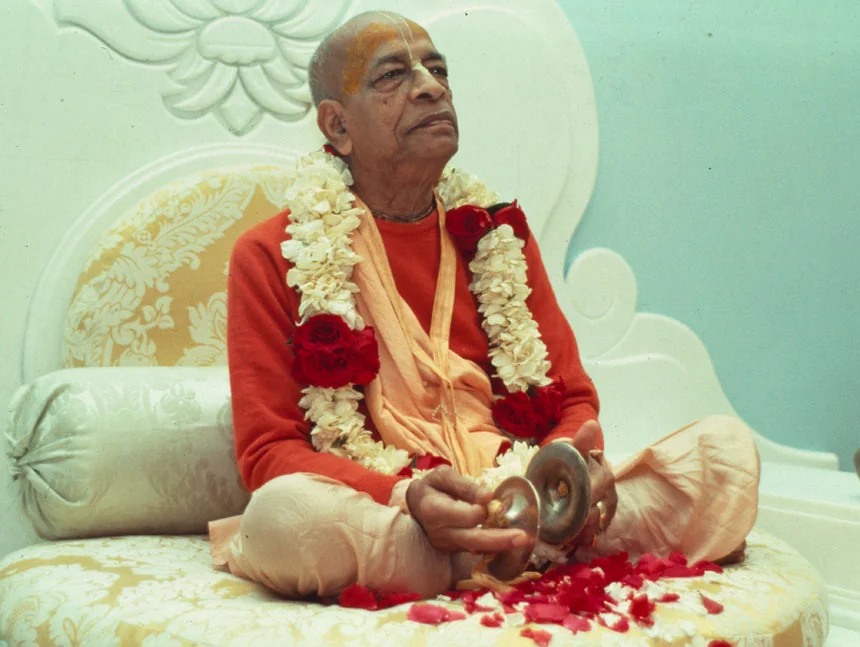
Through sacred chanting and guru's guidance, the soul awakens to Krishna consciousness, transcending all material desires and realizing eternal life.Listen — Srila Prabhupada Uvaca
Śrīmad-Bhāgavatam 2.4.1 SB 2.3.1—25 Recitation — June 24, 1972, Los Angeles 720624SB-LOS ANGELES [41:24 Minutes] SB-02.04.01_720624SB-LOS ANGELES Pradyumna: Oṁ namo bhagavate vāsudevāya. Oṁ namo bhagavate vāsudevāya. Oṁ namo bhagavate vāsudevāya. We chant all the verses in this chapter, all together, starting from the beginning. [Prabhupāda and devotees chant all verses of Śrīmad-Bhāgavatam 2.3.1—25].
Everyone can chant together: śrī-śuka... śrī-śuka uvāca evam etan nigaditaṁ pṛṣṭavān yad bhavān mama nṛṇāṁ yan mriyamāṇānāṁ manuṣyeṣu manīṣiṇām [SB 2.3.1] [Śrī Śukadeva Gosvāmī said: Mahārāja Parīkṣit, as you have inquired from me as to the duty of the intelligent man who is on the threshold of death, so I have answered you.] brahma-varcasa-kāmas tu yajeta brahmaṇaḥ patim indram indriya-kāmas tu prajā-kāmaḥ prajāpatīn devīṁ māyāṁ tu śrī-kāmas tejas-kāmo vibhāvasum vasu-kāmo vasūn rudrān vīrya-kāmo 'tha vīryavān annādya-kāmas tv aditiṁ svarga-kāmo 'diteḥ sutān viśvān devān rājya-kāmaḥ sādhyān saṁsādhako viśām āyuṣ-kāmo 'śvinau devau puṣṭi-kāma ilāṁ yajet pratiṣṭhā-kāmaḥ puruṣo rodasī loka-mātarau rūpābhikāmo gandharvān strī-kāmo 'psara urvaśīm ādhipatya-kāmaḥ sarveṣāṁ yajeta parameṣṭhinam yajñaṁ yajed yaśas-kāmaḥ kośa-kāmaḥ pracetasam vidyā-kāmas tu giriśaṁ dāmpatyārtha umāṁ satīm [SB 2.3.2–7] [One who desires to be absorbed in the impersonal brahma-jyoti effulgence should worship the master of the Vedas (Lord Brahmā or Bṛhaspati, the learned priest), one who desires powerful sex should worship the heavenly King, Indra, and one who desires good progeny should worship the great progenitors called the Prajāpatis. One who desires good fortune should worship Durgādevī, the superintendent of the material world. One desiring to be very powerful should worship fire, and one who aspires only after money should worship the Vasus. One should worship the Rudra incarnations of Lord Śiva if he wants to be a great hero. One who wants a large stock of grains should worship Aditi. One who desires to attain the heavenly planets should worship the sons of Aditi. One who desires a worldly kingdom should worship Viśvadeva, and one who wants to be popular with the general mass of population should worship the Sādhya demigod. One who desires a long span of life should worship the demigods known as the Aśvinī-kumāras, and a person desiring a strongly built body should worship the earth. One who desires stability in his post should worship the horizon and the earth combined. One who desires to be beautiful should worship the beautiful residents of the Gandharva planet, and one who desires a good wife should worship the Apsarās and the Urvaśī society girls of the heavenly kingdom. One who desires domination over others should worship Lord Brahmā, the head of the universe. One who desires tangible fame should worship the Personality of Godhead, and one who desires a good bank balance should worship the demigod Varuṇa. If one desires to be a greatly learned man he should worship Lord Śiva, and if one desires a good marital relation he should worship the chaste goddess Umā, the wife of Lord Śiva.] dharmārtha uttama-ślokaṁ tantuḥ tanvan pitèn yajet rakṣā-kāmaḥ puṇya-janān ojas-kāmo marud-gaṇān [SB 2.3.8] [One should worship Lord Viṣṇu or His devotee for spiritual advancement in knowledge, and for protection of heredity and advancement of a dynasty one should worship the various demigods.] rājya-kāmo manūn devān nirṛtiṁ tv abhicaran yajet kāma-kāmo yajet somam akāmaḥ puruṣaṁ param [SB 2.3.9] [One who desires domination over a kingdom or an empire should worship the Manus. One who desires victory over an enemy should worship the demons, and one who desires sense gratification should worship the moon. But one who desires nothing of material enjoyment should worship the Supreme Personality of Godhead.] akāmaḥ sarva-kāmo vā mokṣa-kāma udāra-dhīḥ tīvreṇa bhakti-yogena yajeta puruṣaṁ param [SB 2.3.10] [A person who has broader intelligence, whether he be full of all material desire, without any material desire, or desiring liberation, must by all means worship the supreme whole, the Personality of Godhead.] etāvān eva yajatām iha niḥśreyasodayaḥ bhagavaty acalo bhāvo yad bhāgavata-saṅgataḥ [SB 2.3.11] [All the different kinds of worshipers of multidemigods can attain the highest perfectional benediction, which is spontaneous attraction unflinchingly fixed upon the Supreme Personality of Godhead, only by the association of the pure devotee of the Lord.] jñānaṁ yad āpratinivṛtta-guṇormi-cakram ātma-prasāda uta yatra guṇeṣv asaṅgaḥ kaivalya-sammata-pathas tv atha bhakti-yogaḥ ko nirvṛto hari-kathāsu ratiṁ na kuryāt [SB 2.3.12] [Transcendental knowledge in relation with the Supreme Lord Hari is knowledge resulting in the complete suspension of the waves and whirlpools of the material modes. Such knowledge is self-satisfying due to its being free from material attachment, and being transcendental it is approved by authorities. Who could fail to be attracted?] śaunaka uvāca ity abhivyāhṛtaṁ rājā niśamya bharatarṣabhaḥ kim anyat pṛṣṭavān bhūyo vaiyāsakim ṛṣiṁ kavim [SB 2.3.13] [Śaunaka said: The son of Vyāsadeva, Śrīla Śukadeva Gosvāmī, was a highly learned sage and was able to describe things in a poetic manner. What did Mahārāja Parīkṣit again inquire from him after hearing all that he had said?] etac chuśrūṣatāṁ vidvan sūta no 'rhasi bhāṣitum kathā hari-kathodarkāḥ satāṁ syuḥ sadasi dhruvam [SB 2.3.14] [O learned Sūta Gosvāmī! Please continue to explain such topics to us because we are all eager to hear. Besides that, topics which result in the discussion of the Lord Hari should certainly be discussed in the assembly of devotees.] sa vai bhāgavato rājā pāṇḍaveyo mahā-rathaḥ bāla-krīḍanakaiḥ krīḍan kṛṣṇa-krīḍāṁ ya ādade [SB 2.3.15] [Mahārāja Parīkṣit, the grandson of the Pāṇḍavas, was from his very childhood a great devotee of the Lord. Even while playing with dolls, he used to worship Lord Kṛṣṇa by imitating the worship of the family Deity.] vaiyāsakiś ca bhagavān vāsudeva-parāyaṇaḥ urugāya-guṇodārāḥ satāṁ syur hi samāgame [SB 2.3.16] [Śukadeva Gosvāmī, the son of Vyāsadeva, was also full in transcendental knowledge and was a great devotee of Lord Kṛṣṇa, son of Vasudeva. So there must have been discussion of Lord Kṛṣṇa, who is glorified by great philosophers and in the company of great devotees.] āyur harati vai puṁsām udyann astaṁ ca yann asau tasyarte yat-kṣaṇo nīta uttama-śloka-vārtayā [SB 2.3.17] [Both by rising and by setting, the sun decreases the duration of life of everyone, except one who utilizes the time by discussing topics of the all-good Personality of Godhead.] taravaḥ kiṁ na jīvanti bhastrāḥ kiṁ na śvasanty uta na khādanti na mehanti kiṁ grāme paśavo 'pare [SB 2.3.18] [Do the trees not live? Do the bellows of the blacksmith not breathe? All around us, do the beasts not eat and discharge semen?] śva-viḍ-varāhoṣṭra-kharaiḥ saṁstutaḥ puruṣaḥ paśuḥ na yat-karṇa-pathopeto jātu nāma gadāgrajaḥ [SB 2.3.19] [Men who are like dogs, hogs, camels and asses praise those men who never listen to the transcendental pastimes of Lord Śrī Kṛṣṇa, the deliverer from evils.] bile batorukrama-vikramān ye na śṛṇvataḥ karṇa-puṭe narasya jihvāsatī dārdurikeva sūta na copagāyaty urugāya-gāthāḥ [SB 2.3.20] [One who has not listened to the messages about the prowess and marvelous acts of the Personality of Godhead and has not sung or chanted loudly the worthy songs about the Lord is to be considered to possess earholes like the holes of snakes and a tongue like the tongue of a frog.] bhāraḥ paraṁ paṭṭa-kirīṭa-juṣṭam apy uttamāṅgaṁ na namen mukundam śāvau karau no kurute saparyāṁ harer lasat-kāñcana-kaṅkaṇau vā [SB 2.3.21] [The upper portion of the body, though crowned with a silk turban, is only a heavy burden if not bowed down before the Personality of Godhead who can award mukti [freedom]. And the hands, though decorated with glittering bangles, are like those of a dead man if not engaged in the service of the Personality of Godhead Hari.] barhāyite te nayane narāṇāṁ liṅgāni viṣṇor na nirīkṣato ye pādau nṛṇāṁ tau druma-janma-bhājau kṣetrāṇi nānuvrajato harer yau [SB 2.3.22] [The eyes which do not look at the symbolic representations of the Personality of Godhead Viṣṇu [His forms, name, quality, etc.] are like those printed on the plumes of the peacock, and the legs which do not move to the holy places [where the Lord is remembered] are considered to be like tree trunks.] jīvañ chavo bhāgavatāṅghri-reṇuṁ na jātu martyo 'bhilabheta yas tu śrī-viṣṇu-padyā manujas tulasyāḥ śvasañ chavo yas tu na veda gandham [SB 2.3.23] [The person who has not at any time received the dust of the feet of the Lord's pure devotee upon his head is certainly a dead body. And the person who has never experienced the aroma of the tulasī leaves from the lotus feet of the Lord is also a dead body, although breathing.] tad aśma-sāraṁ hṛdayaṁ batedaṁ yad gṛhyamāṇair hari-nāma-dheyaiḥ na vikriyetātha yadā vikāro netre jalaṁ gātra-ruheṣu harṣaḥ [SB 2.3.24] [Certainly that heart is steel-framed which, in spite of one's chanting the holy name of the Lord with concentration, does not change even when signs of transformation take place such as tears in the eyes and ecstatic standing of the hairs on end.] athābhidhehy aṅga mano-'nukūlaṁ prabhāṣase bhāgavata-pradhānaḥ yad āha vaiyāsakir ātma-vidyāviśārado nṛpatiṁ sādhu pṛṣṭaḥ [SB 2.3.25] [O Sūta Gosvāmī, your words are pleasing to our minds. Please therefore explain this to us as it was spoken by the great devotee Śukadeva Gosvāmī, who is very expert in transcendental knowledge, and who spoke to Mahārāja Parīkṣit upon being asked.] [07:25] Prabhupāda: So it takes not more than five minutes. If you practice, then you become learned scholars simply by chanting these mantra, and the translation, transcendental vibration, will keep you fit for spiritual advancement. Every verse in Vedic literatures, especially Bhagavad-gītā or Śrīmad-Bhāgavatam, they are not ordinary sounds. Simply if you chant the mantras, you become purified. Śṛṇvatāṁ sva-kathāḥ kṛṣṇaḥ puṇya-śravaṇa-kīrtanaḥ [SB 1.2.17]. Puṇya-śravaṇa-kīrtanaḥ.
Simply by hearing and chanting you become pious. Puṇya-śravaṇa-kīrtanaḥ. Even you don't understand the meaning, the very sound vibration will help you. Now we have finished one chapter within five minutes. How much time it took?
I don't think more than five minutes. So everyone should chant every day at least one chapter. Then? Next chapter? Pradyumna: Text number one. [leads chanting of verse] Prabhupāda: Which chapter? sūta uvāca vaiyāsaker iti vacas tattva-niścayam ātmanaḥ upadhārya matiṁ kṛṣṇe auttareyaḥ satīṁ vyadhāt [SB 2.4.1] Prabhupāda: [corrects pronunciation of devotees' chanting] Any of the girls?
[Prabhupāda corrects pronunciation] All right. Word meaning. Pradyumna: [leads chanting of synonyms] sūtaḥ uvāca—Sūta Gosvāmī said; vaiyāsakeḥ—of Śukadeva Gosvāmī; iti—thus; vacaḥ—speeches; tattva-niścayam—that which verifies the truth; ātmanaḥ—in the self; upadhārya—just having realized; matim—concentration of the mind; kṛṣṇe—unto Lord Kṛṣṇa; auttareyaḥ—the son of Uttarā; satīm—chaste; vyadhāt—applied. [14:28] [break] Translation: "Sūta Gosvāmī said: Mahārāja Parīkṣit, the son of Uttarā, after hearing the speeches of Śukadeva Gosvāmī, which were all about the truth of the self, applied his concentration faithfully upon Lord Kṛṣṇa." Prabhupāda: So here is, vacas tattvam ātmā ni..., ātmā, vacas tattva niścayam ātmā. Vacas tattva-niścayam ātmanaḥ. Vaiyāsaki.
So ātma-tattva, self-realization, this is required. So we have to approach a person like Vaiyāsaki, Śukadeva Gosvāmī. Niścayam. Vacas tattva-niścayam.
If you want to know positively, niścayam, without any mistake, then we have to approach a person like Śukadeva Gosvāmī or the paramparā system, who is coming in disciplic succession of paramparā system. The paramparā system means... Just like we claim paramparā system from Kṛṣṇa. So whatever Kṛṣṇa says, or He said five thousand years ago, we are repeating the same thing. That is called paramparā system.