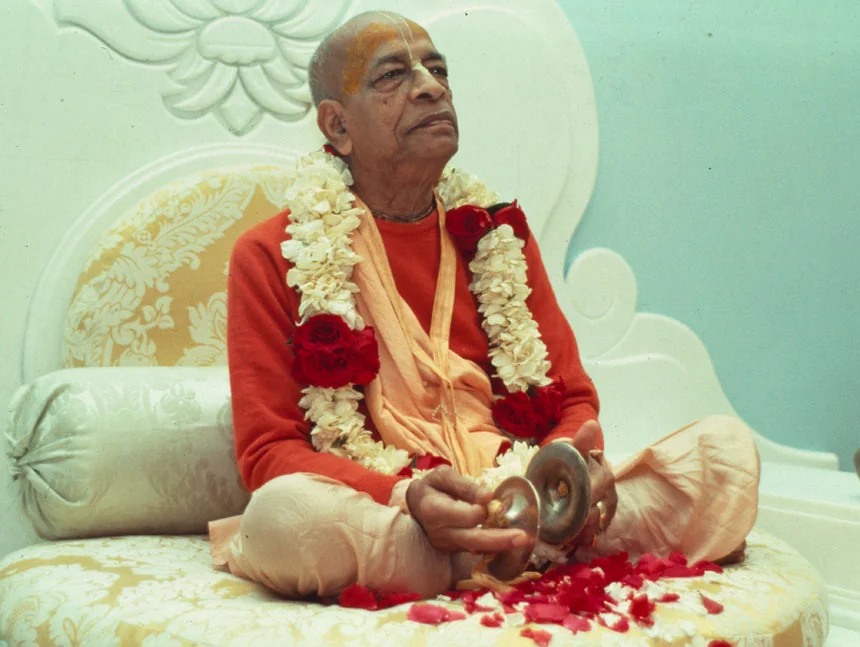
The eternal original person remains alive in the universe's perfect function; we regain value by reconnecting with Krishna.Listen — Srila Prabhupada Uvaca
Lecture on Teachings of Lord Caitanya — October 2, 1968, Seattle 681002LE-SEATTLE [98:42 Minutes] Prabhupāda: You sit down. [kīrtana] vande 'haṁ śrī-guroḥ śrī-yuta-pada-kamalaṁ śrī-gurūn vaiṣṇavāṁś ca śrī-rūpaṁ sāgrajātaṁ saha-gaṇa-raghunāthānvitaṁ taṁ sa-jīvam sādvaitaṁ sāvadhūtaṁ parijana-sahitaṁ kṛṣṇa-caitanya-devaṁ śrī-rādhā-kṛṣṇa-pādān saha-gaṇa-lalitā-śrī-viśākhānvitāṁś ca [I offer my respectful obeisances unto the lotus feet of my spiritual master and of all the other preceptors on the path of devotional service. I offer my respectful obeisances unto all the Vaiṣṇavas and unto the Six Gosvāmīs, including Śrīla Rūpa Gosvāmī, Śrīla Sanātana Gosvāmī, Raghunātha dāsa Gosvāmī, Jīva Gosvāmī and their associates. I offer my respectful obeisances unto Śrī Advaita Ācārya Prabhu, Śrī Nityānanda Prabhu, Śrī Caitanya Mahāprabhu, and all His devotees, headed by Śrīvāsa Ṭhākura. I then offer my respectful obeisances unto the lotus feet of Lord Kṛṣṇa, Śrīmatī Rādhārāṇī and all the gopīs, headed by Lalitā and Viśākhā.] nama oṁ viṣṇu-pādāya kṛṣṇa-preṣṭhāya bhū-tale śrīmate bhaktisiddhānta-sarasvatīti nāmine [I offer my respectful obeisances unto His Divine Grace Bhaktisiddhānta Sarasvatī, who is very dear to Lord Kṛṣṇa, having taken shelter at His lotus feet.] śrī-vārṣabhānavī-devī-dayitāya kṛpābdhaye kṛṣṇa-sambandha-vijñāna-dāyine prabhave namaḥ I offer my respectful obeisances to Śrī Vārṣabhānavī-devī-dayita dāsa [another name of Śrīla Bhaktisiddhānta Sarasvatī], who is favored by Śrīmatī Rādhārāṇī and who is the ocean of transcendental mercy and the deliverer of the science of Kṛṣṇa. mādhuryojjvala-premāḍhya-śrī-rūpānuga-bhaktidaśrī-gaura-karuṇā-śakti-vigrahāya namo 'stu te [I offer my respectful obeisances unto you, the personified energy of Śrī Caitanya Mahāprabhu's mercy, who delivers devotional service enriched with conjugal love of Śrī Śrī Rādhā and Kṛṣṇa, coming exactly in the line of revelation of Śrīla Rūpa Gosvāmī.] namas te gaura-vāṇī-śrī-mūrtaye dīna-tāriṇe rūpānuga-viruddhāpasiddhānta-dhvānta-hāriṇe [I offer my respectful obeisances unto you, who are the personified teachings of Lord Caitanya. You are the deliverer of the fallen souls. You do not tolerate any statement against the teachings of devotional service enunciated by Śrīla Rūpa Gosvāmī.] namo gaura-kiśorāya sākṣād-vairāgya-mūrtaye vipralambha-rasāmbhodhe pādāmbujāya te namaḥ [I offer my respectful obeisances unto Śrīla Gaurakiśora dāsa Bābājī Mahārāja [the spiritual master of Śrīla Bhaktisiddhānta Sarasvatī], who is renunciation personified. He is always merged in a feeling of separation and intense love of Kṛṣṇa.] namo bhaktivinodāya sac-cid-ānanda-nāmine gaura-śakti-svarūpāya rūpānuga-varāya te [I offer my respectful obeisances unto Śrīla Saccidānanda Bhaktivinoda, who is the transcendental energy of Śrī Caitanya Mahāprabhu. He is a strict follower of the Gosvāmīs, headed by Śrīla Rūpa Gosvāmī.] gaurāvirbhāva-bhūmes tvaṁ nirdeṣṭā saj-jana-priyaḥ vaiṣṇava-sārvabhaumaḥ śrī-jagannāthāya te namaḥ [I offer my respectful obeisances to Śrīla Jagannātha dāsa Bābājī, who is respected by the entire Vaiṣṇava community and who confirmed the discovery of the place where Lord Caitanya appeared.] vāñchā-kalpatarubhyaś ca kṛpā-sindhubhya eva ca patitānāṁ pāvenebhyo vaiṣṇavebhyo namo namaḥ [I offer my respectful obeisances unto all the Vaiṣṇava devotees of the Lord. They are just like desire trees who can fulfill the desires of everyone, and they are full of compassion for the fallen conditioned souls.] namo mahā-vadānyāya kṛṣṇa-prema-pradāya te kṛṣṇāya kṛṣṇa-caitanya-nāmne gaura-tviṣe namaḥ [O most munificent incarnation! You are Kṛṣṇa Himself appearing as Śrī Kṛṣṇa Caitanya Mahāprabhu. You have assumed the golden color of Śrīmātī Rādhārāṇī, and You are widely distributing pure love of Kṛṣṇa. We offer our respectful obeisances unto You.] pañca-tattvātmakaṁ kṛṣṇaṁ bhakta-rūpa-svarūpakam bhaktāvatāraṁ bhaktākhyaṁ namāmi bhakta-śaktikam [I offer my obeisances unto the Supreme Lord, Kṛṣṇa, who is nondifferent from His features as a devotee, devotional manifestation, devotional incarnation, pure devotee and devotional energy.] he kṛṣṇa karuṇā-sindho dīna-bandho jagat-pate gopeśa gopikā-kānta rādhā-kānta namo 'stu te [O my dear Kṛṣṇa, O ocean of mercy, O friend of the distressed and the source of creation, O master of the cowherd men and the lover of the gopīs, especially Rādhārāṇī, I offer my respectful obeisances unto You.] jayatāṁ, suratau, paṅgor, mama, manda, mater, gate mat, sarvasva, padām, bhojau, rādhā, madana, mohanau [Sambandhādhideva Praṇāma] [Glory to the all-merciful Rādhā and Madana-mohana! I am lame and ill advised, yet They are my directors, and Their lotus feet are everything to me.] dīvyad, vṛnda, araṇya, kalpa, drumādhaḥ śrīmad, ratna, agāra, siṁha, asana-sthau śrī śrī, rādhā, śrīla, govinda, devau preṣṭhā, devī, sevya, mānau, smarāmi [Abhidheyādhideva Praṇāma] [In a temple of jewels in Vṛndāvana, underneath a desire tree, Śrī Śrī Rādhā-Govinda, served by Their most confidential associates, sit upon an effulgent throne. I offer my most humble obeisances unto Them.] śrīman namo, rāsa, rasa, arambhī, vaṁśī, vaṭa, taṭa, sthitaḥ karṣan, veṇu, svanair, gopīr, gopī, nāthaḥ, śriye, astu, naḥ [Prayojanādhideva Praṇāma] [Śrī Śrīla Gopīnātha, who originated the transcendental mellow of the rāsa dance, stands on the shore in Vaṁśīvaṭa and attracts the attention of the cowherd damsels with the sound of His celebrated flute. May they all confer upon us their benediction.] tapta-kāñcana-gaurāṅgī rādhe vṛndāvaneśvari vṛṣabhānu-sute devī praṇamāmi hari-priye [I offer my respects to Rādhārāṇī, whose bodily complexion is like molten gold and who is the Queen of Vṛndāvana. You are the daughter of King Vṛṣabhānu, and You are very dear to Lord Kṛṣṇa.] bhaja-śrī-kṛṣṇa-caitanya prabhu nityānanda śrī-advaita gadādhara śrīvāsādi-gaura-bhakta-vṛnda [I offer my obeisances to Śrī Kṛṣṇa Caitanya, Prabhu Nityānanda, Śrī Advaita, Gadādhara, Śrīvāsa and all others in the line of devotion.] hare kṛṣṇa hare kṛṣṇa kṛṣṇa kṛṣṇa hare hare hare rāma hare rāma rāma rāma hare hare [My dear Lord, and the spiritual energy of the Lord, kindly engage me in Your service. I am now embarrassed with this material service. Please engage me in Your service.] [prema-dhvani] Thank you very much. [devotees offer obeisances] You have got fan?
Fan, fan. [26:27] [sings:] Govindam ādi-puruṣaṁ tam ahaṁ bhajāmi. [devotees respond three times] cintāmaṇi-prakara-sadmasu kalpa-vṛkṣalakṣāvṛteṣu surabhīr abhipālayantam lakṣmī-sahasra-śata-sambhrama-sevyamānaṁ govindam ādi-puruṣaṁ tam ahaṁ bhajāmi [Bs. 5.29] [I worship Govinda, the primeval Lord, the first progenitor who is tending the cows, yielding all desire, in abodes built with spiritual gems, surrounded by millions of purpose trees, always served with great reverence and affection by hundreds of thousands of lakṣmīs or gopīs.] Devotees: Govindam ādi-puruṣaṁ tam ahaṁ bhajāmi. [respond twice more] Prabhupāda: So our program is to worship the original Supreme Personality of Godhead, Govinda. This is Kṛṣṇa consciousness movement: find out who is the original person.
Naturally, everyone is anxious to find out the original person of a family, original person of a society, original person of a nation, original person of humanity... You go on searching. But if you can find out the original person from whom everything has come out, that is Brahman. Janmādy asya yataḥ The Vedānta-sūtra says Brahman, the Absolute Truth, is that from whom everything has emanated.
Very simple description. What is God, what is the Absolute Truth, very simple definition—the original person. So this Kṛṣṇa consciousness movement means to approach the original person. The original person is not dead, because everything emanates from the original person, so everything is working very nicely. The sun is rising, the moon is rising, the seasons are changing, so..., there is night, there is day, just in the order.
So the function of the body of the original person is going on nicely. How you can say that God is dead? Just like in your body, when the physician finds by feeling your pulse that the heart beating is going on nicely, he does not declare that "This man is dead." He says, "Yes, he is alive." Similarly, if you are intelligent enough, you can feel the pulse of the universal body—and it is going on nicely. So how you can say God is dead? God is never dead. It is rascal's version that God is dead—unintelligent persons, persons who have no sense how to feel something dead or alive.
One who has got the sense to feel how a thing is dead or alive, to understand, he'll never say God is dead. Therefore in the Bhagavad-gītā it is stated that janma karma me divyaṁ yo jānāti tattvataḥ [Bg. 4.9]: [One who knows the transcendental nature of My appearance and activities does not, upon leaving the body, take his birth again in this material world, but attains My eternal abode, O Arjuna.] "Any intelligent person who can simply understand how I take my birth and how I work," janma karma... Now, mark this word janma, birth, and karma, work. He never says janma mṛtyu. Mṛtyu means death.
Everything that is born, that has death also. Anything. We haven't got any experience which is born does not die. This body is born; therefore it will die. The death is born with the birth of my body.